


Food & Drink
Must taste foods
Food Guide
Without a doubt, Mongolian cuisine is one of the best windows into a glimpse of Mongolia’s culture and traditions while visiting Mongolia.
Mongolian Popular Dishes
You will probably be amazed at Mongolian nomads’ famous hospitality and a warm welcome to their visitors. Firstly, Every visitor is offered Mongolian traditional milk tea, dairy products, and any other kind of food they have regardless of whether you are a new acquaintance or an old friend. The majority of Mongolian traditional cuisine is meat-based including meat of horse, yak, camel, beef, and lamb. This is because the meat was and is the perfect source of protein for the Mongolians. Thus it enables them to withstand the cold of harsh weather. The best quality of Mongolian food is that all meat is from grass-fed, free-range livestock. Unlike popular belief, not all cuisine in Mongolia is made entirely of meat. Russian, Chinese, and Western influences and vegetables are an integral part of Mongolian food nowadays. The capital of the second-largest landlocked country even serves a wide selection of seafood. Everywhere you may go, the hospitality and warmth of Mongolians will accompany you. The city of Ulaanbaatar has a lot of fine restaurants of European, Japanese, Korean, and Chinese restaurants. From the world, fast food chains here have Burger King, Pizza Hut, and KFC shops. Here, we highlight nine traditional Mongolian dishes you can try only in Mongolia!
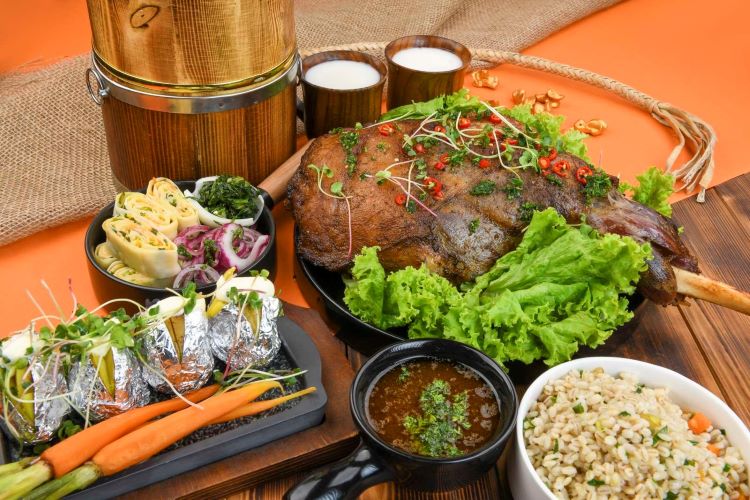
1. Khorkhog (authentic Mongolian bbq). Real Mongolian barbecue is known as khorkhog and is a staple across the vast reaches of this country. It is usually made with mutton, which is cooked inside a pot containing burning rocks heated in an open fire. Vegetables are added to make a stew and the flavors are left to blend for several hours. This is best enjoyed inside a Mongolian ger, where the food is served communally
2.Boodog (goat or marmot bbq). As with Khorkhog, Boodog is an example of Mongolian barbecue which also uses hot stones as a cooking method, but in this case, the hot stones are not placed inside a pot but are inserted into the carcass itself. The dish is usually made with either a young goat or more often a marmot, which is stuffed with heated rocks and a variety of vegetables and spices. It is then simultaneously heated from the outside, either on a barbecue or with a blowtorch to ensure it is cooked through and to burn off the animal’s fur. The dish is another example of a more pragmatic nomadic lifestyle in which cooking materials are not readily at hand and rocks and fire stand in for an oven. This dish can be experienced throughout Mongolia. It is best experienced out on the steppe where traditional cooking methods are preserved. Tour companies offer their guests a chance to try Boodog upon request.
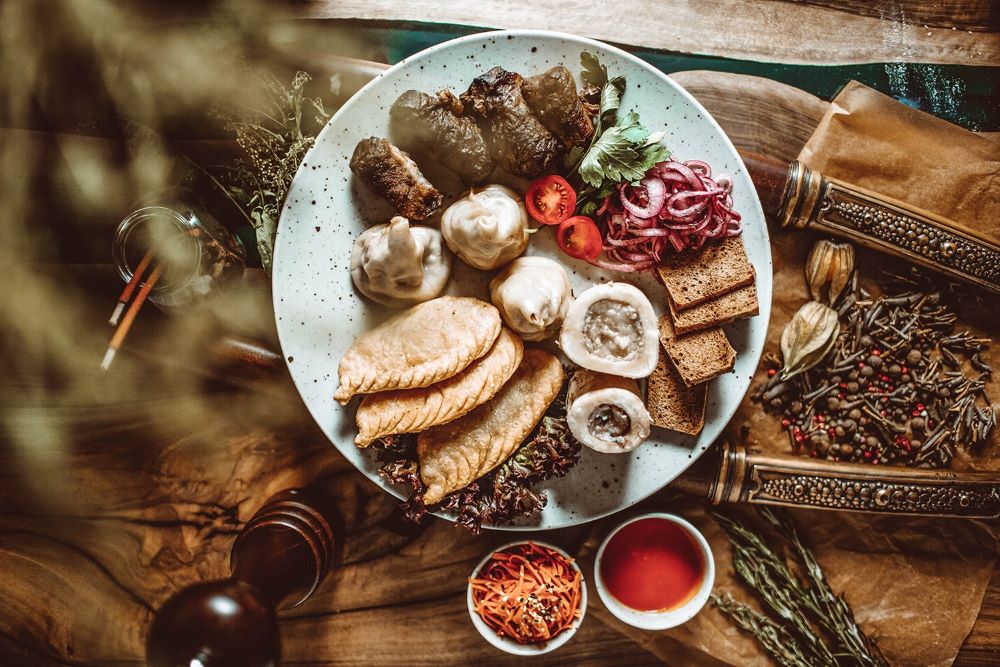
3. Buuz and Bansh the Mognolian dumplings. Dumplings are found on dinner tables throughout Mongolia and these small doughy packages of mutton or beef reveal the connection between this isolated country and its Chinese neighbors to the south. Mongolian dumplings are distinctly different from those found in Chinese Dim Sum since they are made from a typically hardy dough and are often fried. Buuz is the general name for dumplings. The name is used by a wide variety of restaurants throughout Ulaanbaatar in which these boiled or steamed, meat-filled dumplings are served. Bansh is a smaller version of these dumplings. One of the most popular restaurants serving Buuz is Ulaanbaatar’s Khaan Buuz, where both varieties are on offer and are considered a version of Mongolian fast food. (source: https://theculturetrip. com/Asia/Mongolia).
4. Khuusuur, fried meat pie. A local favorite, khuushuur is a popular lunch food like Buuz. It is made similarly like buuz except when the dough is stuffed with meat, it is flattened by hand, about one cm thick. Khuushuur is then deep fried in oil and are served like pancakes. It is believed that a good Mongolian chef can be judged by his or her skill in making khuushuur. If you are in Ulaanbaatar during the Naadam Festival, don’t miss out on visiting one of the colorful “Khuushuur tents” where khuushuur is cooked in front of you and served fresh as the festival food. Both khuushuur and buuz can be stuffed with vegetables or fish, serving a variety of plates to the guests.
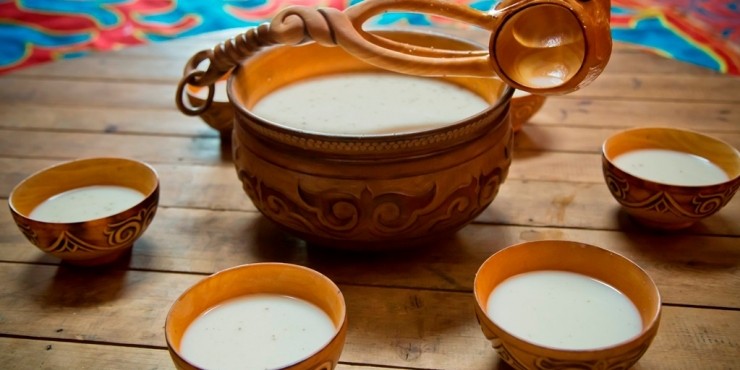
5. Dairy food and drinks. There is no dispute that Mongolia is a country of dairy products. If meat is the main food item, milk is the main source of drink. There are hundreds of different types of dairy products developed over the years. Dairy products are often consumed as health food and road snacks. Milk and meat are the pillars of Mongolian cuisine. The national drink of the country is called airag, mare’s fermented milk. Airags are produced beginning in June and consumed throughout the summer months in most parts of the city. It is rich with vitamins and nutrition and also used as part of a healthy diet. Over the years, Mongolian nomads have developed a number of unique dairy products, which are made in traditional ways and include different types of yoghurt, cottage cheese, dried curds and fermented dairy products. Mongolian dairy products are rich with protein, carbohydrates, fat and essential minerals. The essential properties of the milk and dairy products do suggest using them as valuable local resources for human health, especially in nursing and health treatment practices.
6. Milk Tea. Mongolia has one of the great tea cultures of Asia. Every morning, you can see herders boil their tea, offer to the spirits of the sky and ancestors, and then offer to the rest of the family. The most common tea is called milk tea. After water is boiled, a special tea imported either from China or Central Asia is added and when it boils, milk and salt are added. It is lighter than Tibetan butter tea and makes up an important diet of the Mongolian herders. In Mongolia, tea is also taken as food. In various parts of the country, herders add dried meat, rice and herbs, creating a delicious mixture, and consume this to sustain themselves through the harsh weather. A researcher actually identified over 68 types of tea brewed and consumed throughout Mongolia.